Motorization & controls
Battery-operated vs hardwired motorized shades
In this guide
For homeowners in New Jersey and New York, the choice between battery-operated and hardwired motorized shades often comes down to one practical question: how much access do you have to the walls and windows right now? Battery power can simplify a retrofit because it typically avoids opening finished surfaces for new low-voltage wiring. Hardwiring may make more sense during construction or renovation, when cable routes, power supplies, pockets, and control locations can be planned before the walls close.
Neither approach is automatically the right one for every home. Window count, shade size, access for future service, preferred controls, and remodeling plans all shape the decision. Start with the room and the building conditions, then select a system that fits them.
Begin with the stage of the project
In an existing home, battery-operated shades can reduce the amount of electrical preparation required. That can be useful when walls, trim, wallpaper, or built-ins are already complete. The motor and power source still need to fit the selected shade, and someone will eventually need clear access to the battery compartment. The benefit is that the installation may be possible without creating a new wired path to each opening.
New construction and substantial renovations create a different opportunity. Hardwired motorized shades can be considered alongside lighting, electrical, and home-control plans. Wiring can be routed before drywall, and power supplies can be placed where they remain accessible. If recessed shade pockets are part of the design, the architect, builder, electrician, window treatment professional, and other trades should coordinate dimensions and access before framing is finalized.
A room-by-room review of CMI’s motorized window treatment options can help establish which openings need early planning and which may suit a simpler retrofit.
Look at power access, not just the nearest outlet
A hardwired shade needs more than electricity somewhere in the room. The correct cable must reach the correct location at the window, based on the selected motor and installation details. The power supply and related components also need appropriate placement.
Battery-operated shades remove the need for a dedicated wire to each opening, but they do not remove the need for access. A battery compartment hidden behind a deep valance or difficult trim detail may be inconvenient later. Tall stair windows, double-height rooms, and windows above fixed furniture deserve extra attention because routine access can require planning.
For either power method, ask who will reach the motor, batteries, wiring connections, and power supply after the room is furnished. The installation can look clean without hiding every working part behind finished construction.
Plan pockets and concealment early
Recessed pockets can create a restrained architectural look, but they tighten the coordination requirements. The pocket has to accommodate the chosen shade, roll direction, brackets, wiring or battery access, and any removable closure. The finished ceiling line should not block future service.
A hardwired installation may place cables inside or near the pocket. A battery-operated design may need enough room to open or remove the battery housing without taking apart nearby finishes. In both cases, pocket dimensions should follow the actual window treatment specification rather than a rough allowance.
If a fully recessed detail is important, settle the shade type and power approach before framing and electrical rough-in. If the home is already finished, an outside-mounted shade or a visible but carefully detailed headrail may be more sensible than forcing a pocket into the existing architecture.
Match controls to daily habits
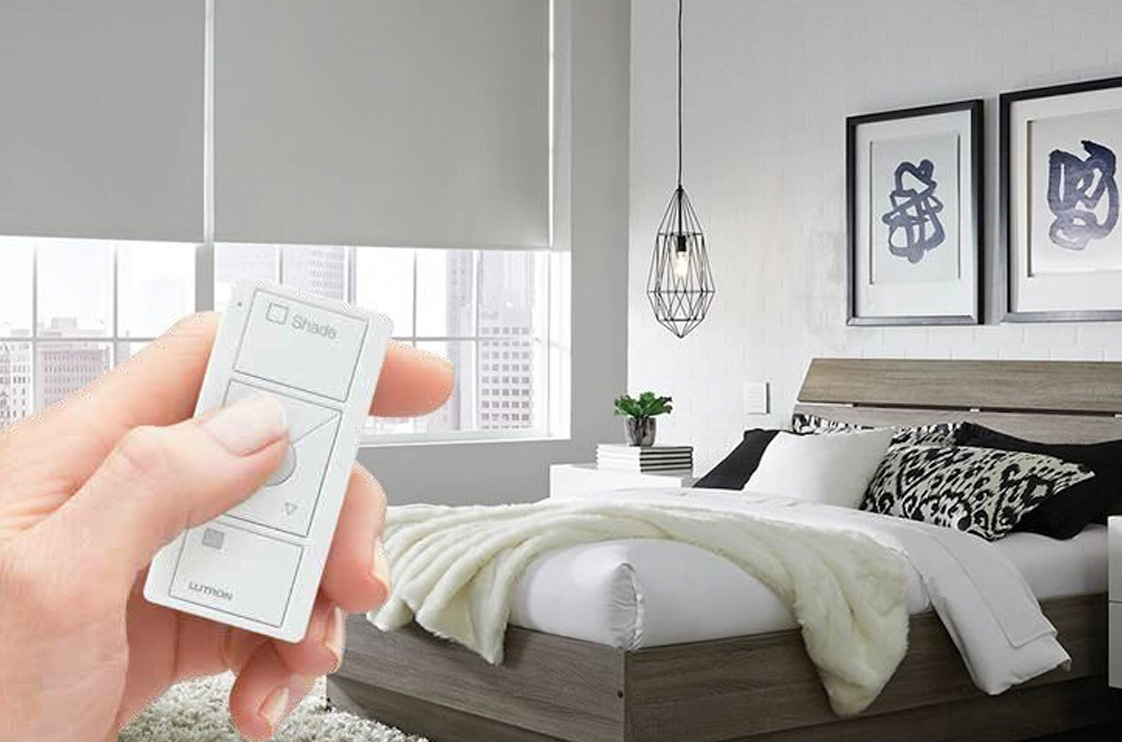
Motorization can be operated in several ways depending on the chosen system and configuration. A handheld control may be enough for a single room. Wall controls can feel more natural when shades are used like lighting. App-based or connected control may suit households that want scenes, schedules, or coordination with other compatible systems.
Power source and control method are related, but they are not the same decision. Battery operation does not necessarily mean basic control, and hardwiring does not automatically include a particular smart-home connection. Compatibility should be confirmed for the exact motor, controls, and wider home system under consideration.
CMI features brands including Lutron window treatment solutions and Somfy motorization options. Available controls, power arrangements, fabrics, and shade styles depend on the selected configuration, so brand choice should follow the project requirements rather than precede them.
Consider window count and maintenance access
One battery-operated shade in an easy-to-reach room creates a different maintenance pattern from a whole house of motorized openings. As the number of shades grows, it becomes more important to map where each power source is located and how it will be reached. Battery replacement or charging needs will vary with the system, shade, use pattern, and environmental conditions.
Hardwiring can reduce battery-related upkeep at the window, but the centralized or distributed electrical components still need service access. They should not be permanently buried behind finished surfaces.
For mixed conditions, a mixed power plan may be reasonable. A renovation could use hardwired shades in rooms with open walls and battery-operated shades where finished surfaces should remain intact. Consistent controls may still be possible when compatible components are selected.
Leave room for future changes
Windows and routines change. A nursery may become an office. Furniture may move in front of a window. A future remodel may expose walls that are closed today. Consider whether a shade can be reached, removed, or updated without disturbing millwork and ceiling details.
During new construction, some homeowners may choose to plan pathways or accessible locations even if every shade is not installed at once. In a retrofit, it may be wiser to avoid invasive electrical work now and reconsider hardwiring during a later renovation. The useful question is not simply which option feels more permanent. It is which plan remains understandable and serviceable as the home evolves.
A practical way to decide
Choose battery-operated shades when preserving finished surfaces and simplifying individual-window installation are leading priorities, provided battery access is workable. Consider hardwired motorized shades when walls are open, many openings are being coordinated, recessed details matter, or reducing battery service at the window is important. Then test that initial choice against controls, service access, pocket design, and future remodeling.
Frequently asked questions
Can battery-operated shades work on large windows?
Possibly. Suitability depends on the shade type, dimensions, fabric, motor, mounting conditions, and selected power configuration. Large or heavy treatments should be specified for the actual opening rather than assumed to work with any battery motor.
Do hardwired motorized shades need an electrician?
Electrical work and local requirements depend on the system and project conditions. A window treatment professional can coordinate shade specifications, while the appropriate electrical professional should handle work that falls within the electrical scope.
Can one home use both battery and hardwired shades?
Yes, when the selected systems and controls support the intended arrangement. A mixed approach can be useful in renovations where some walls are open and others are not.
CMI Window Fashions helps homeowners, designers, builders, and other project partners compare power, mounting, concealment, and control choices for homes in New Jersey and New York. Schedule a window treatment consultation before electrical rough-in or before ordering retrofit shades so the specification reflects the actual openings.